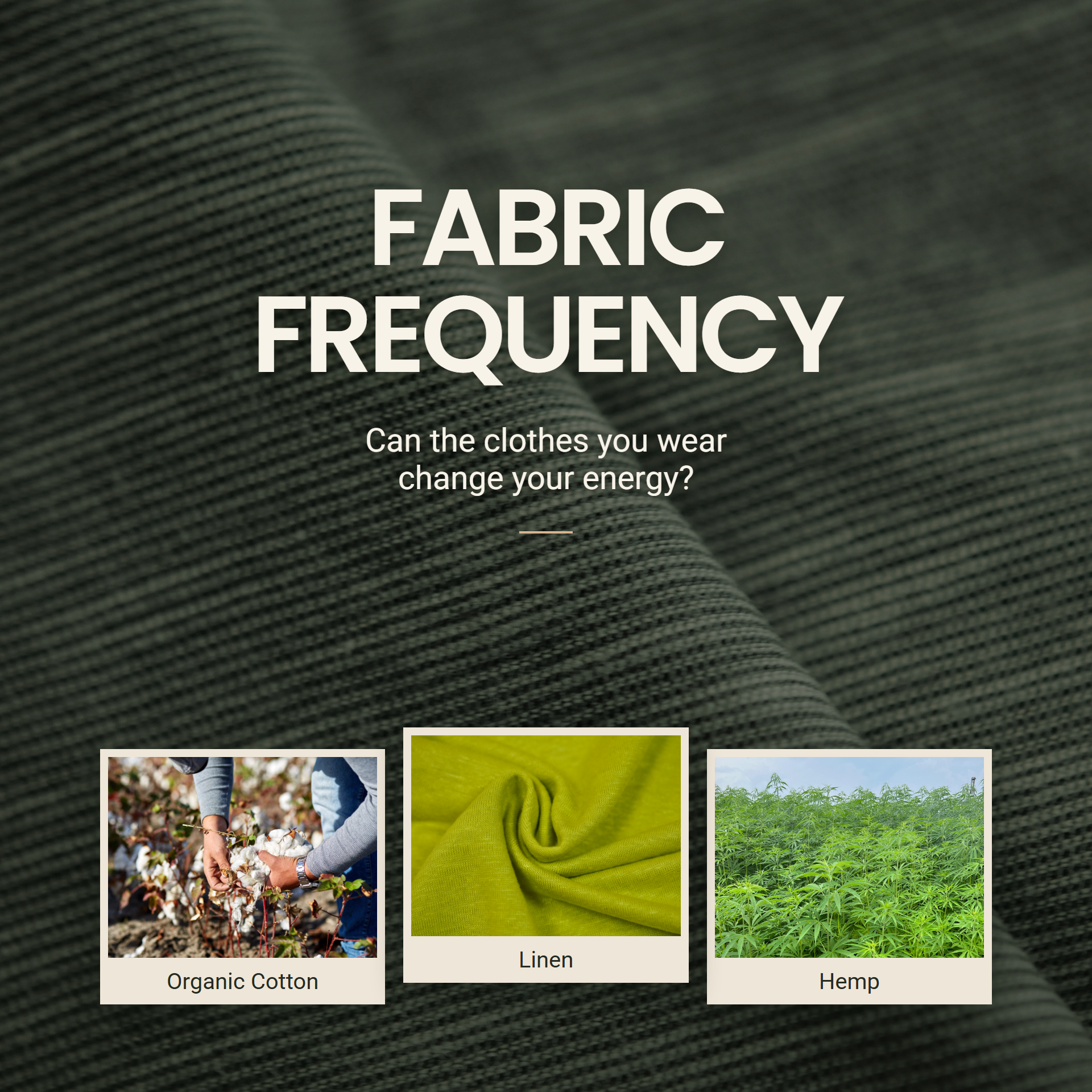
One of your customers has probably already asked. Somewhere between a product review and a TikTok comment, the question arrives: does linen really carry a higher frequency than polyester, and can a fabric change how the wearer feels?
A growing number of people say it can. The idea is called fabric frequency, and it holds that everything has a signature frequency, including the human body, which is placed at around 100. A fabric above that level is said to give energy to the person wearing it. A fabric below it is said to take energy away.
The numbers travel as a ranked list. Linen and wool sit at the top with 5,000 each, which is where linen earns its nickname as the super-fabric. Hemp is placed somewhere between 2,000 and 5,000, depending on which version you meet. Organic cotton lands at exactly 100, level with the body and therefore described as in tune with it, while conventional cotton slips to around 70. Silk, viscose and polyester fall to 15 or below!
Most people can feel the difference between a linen sheet and a polyester one without being told which is which. “High-vibration” wardrobes and bedding have become a way to talk about that feeling, which is why the question is reaching brands rather than staying online.
What science can say so far
Here we should be clear. The frequency numbers come from readings described in 2003. They were not published in a scientific journal and have not been repeated by other labs. We share them as an idea worth knowing about, not as proven fact.
But the story does not end there. Three things about fibres and the body are measured.
- Fibres do vibrate. The chemical bonds in every fibre absorb infrared light at their own frequencies. Recyclers use this fingerprint to sort cotton from polyester, and the US standards institute NIST has published a free database of fingerprints for 64 fabric types.
- Natural fibres breathe with you. Under standard conditions wool holds 13.6% of its weight in moisture, hemp 12% and cotton yarn 7 to 8.5%. Polyester holds 0.4% (ASTM D1909). That is a real gap between natural and synthetic, and you feel it as comfort.
- What you sleep in matters. In a controlled sleep trial at 30 °C, older adults fell asleep in about 12 minutes in Merino wool sleepwear, against 22 in polyester and 27 in cotton. The authors describe the benefits as small, and two of them worked for the wool industry.
So can a linen shirt boost your energy? Nobody has shown that it raises a frequency. But a fibre that keeps you dry, cool and sleeping well may leave the wearer feeling very much the way the chart promises.
That distinction matters more for a brand than for the person asking. A claim about frequency cannot be substantiated. A claim about moisture, breathability or fibre content can, and it is the kind of claim that survives a customer question, a retailer’s review and the EU rules on environmental claims that have applied since September 2026.
We work with organic cotton, hemp and other natural fibres every day, so we find this conversation fascinating. We will keep our own product claims to what we can certify and test, and we are glad to share the documentation behind them with the brands we work with.