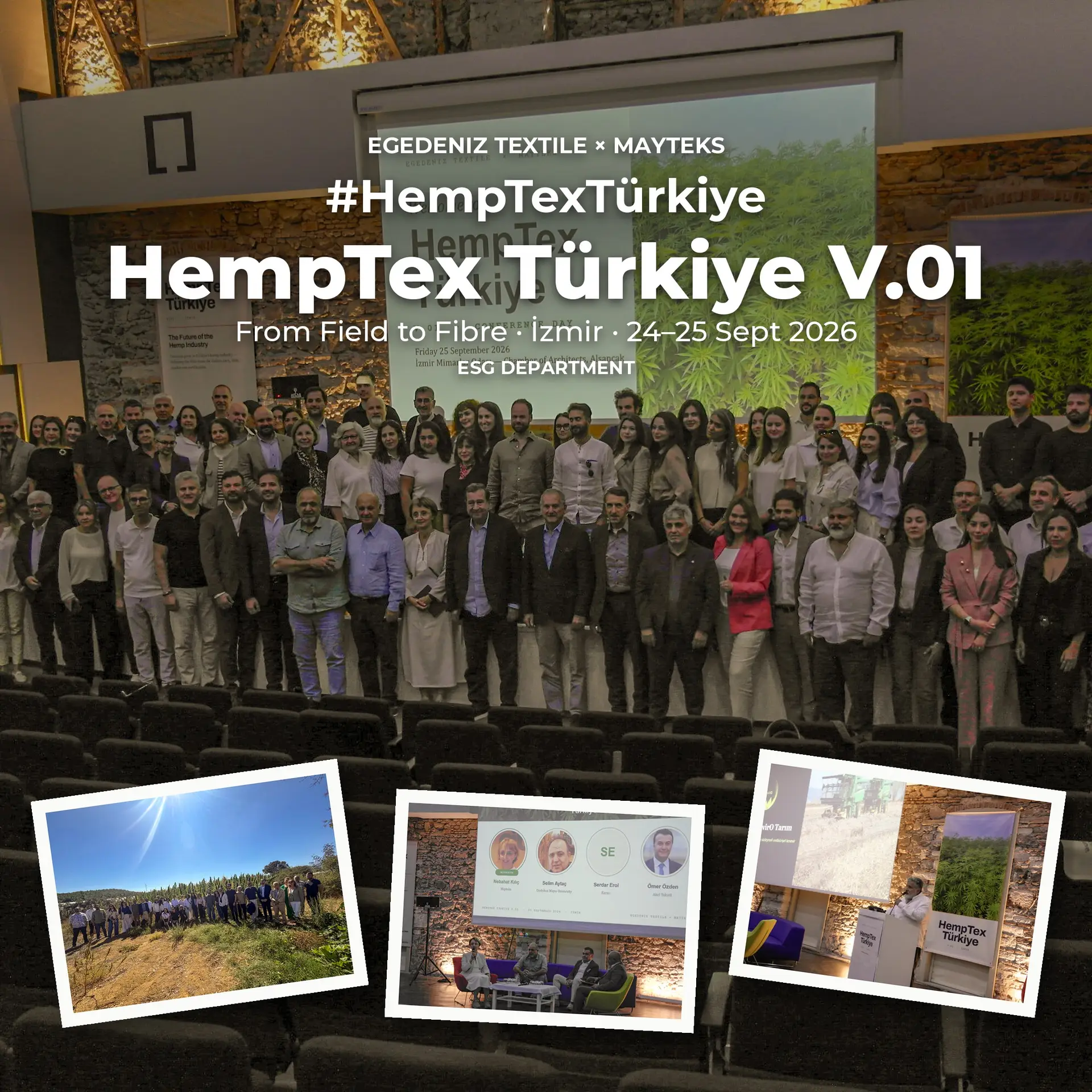
On 24–25 September 2026, Egedeniz Textile and Mayteks brought Turkey’s hemp value chain together in İzmir — from a hemp field in Menderes to a full conference day with 20+ speakers.
On 24–25 September 2026, Egedeniz Textile and Mayteks hosted HempTex Türkiye V.01 in İzmir — the first event in Turkey officially dedicated to hemp textiles. Over two days, farmers, researchers, spinners, knitters, technology providers, certification bodies and international brands met to discuss one question: how can Turkey turn hemp into a reliable, traceable and commercially viable textile fibre?
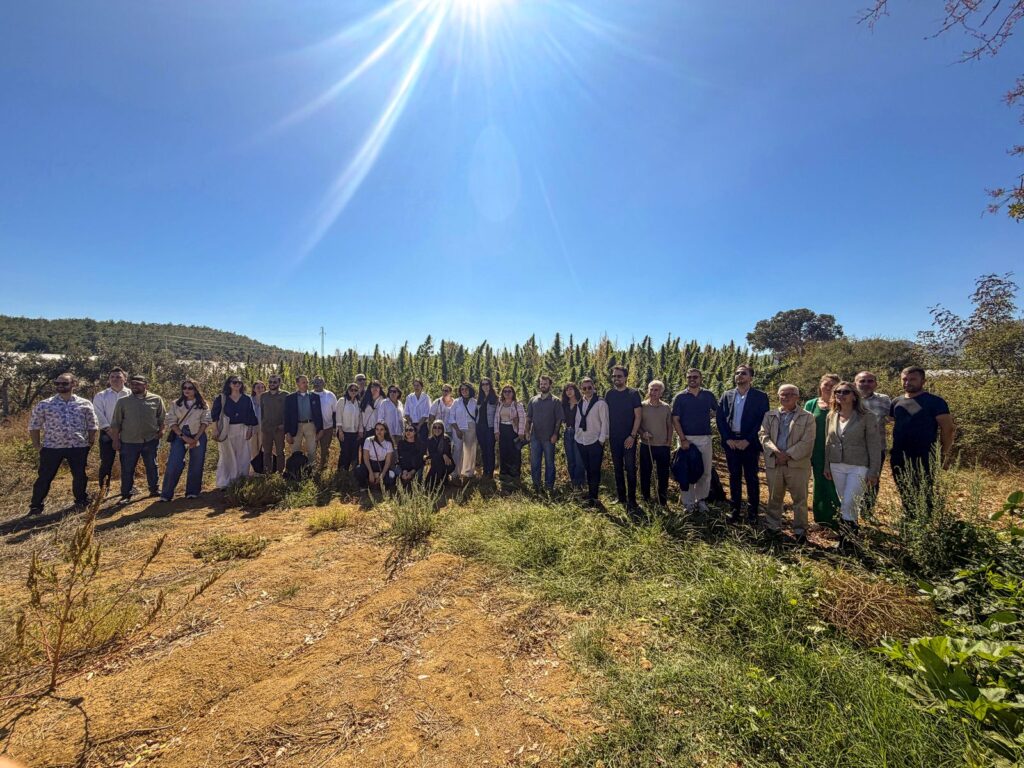
Day 1 — At hemp field, İzmir, Turkey
We began where every fibre begins: in the field. Our guests visited the hemp field of Powerseed in Menderes, İzmir, hosted by Burcu Filebelli, who shared Powerseed’s first-hand experience of growing hemp in the Aegean. Seeing the crop standing in the field gave everyone a shared starting point for the conversations that followed.
Day 2 — From field to yarn, knit, market and certification
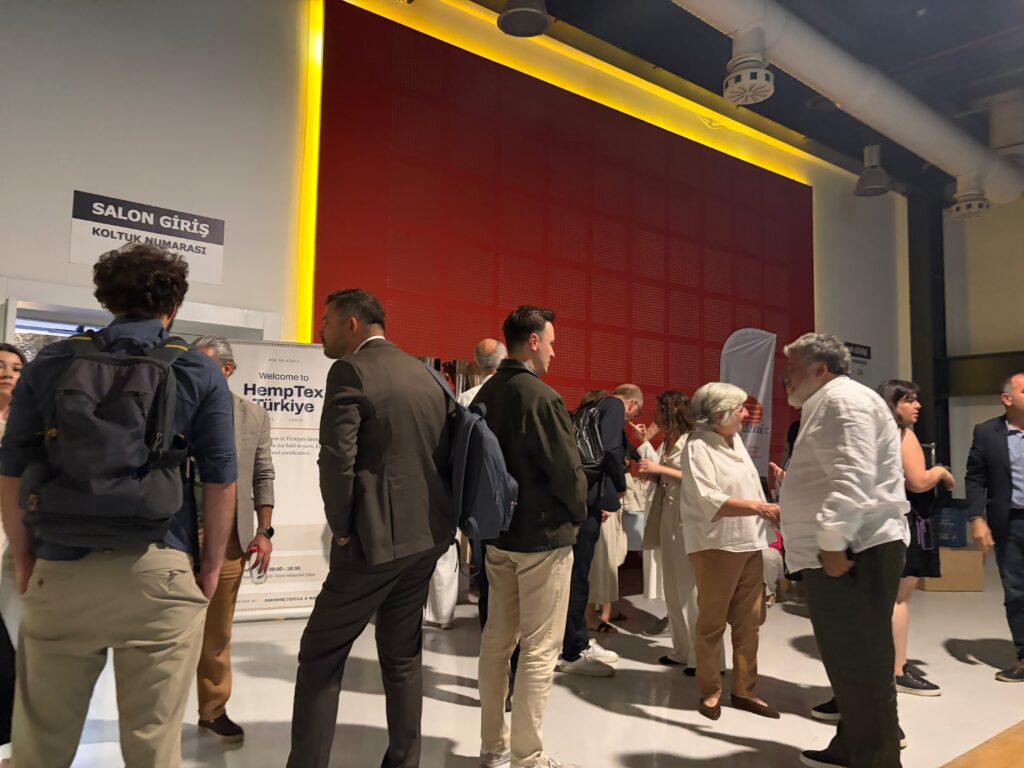
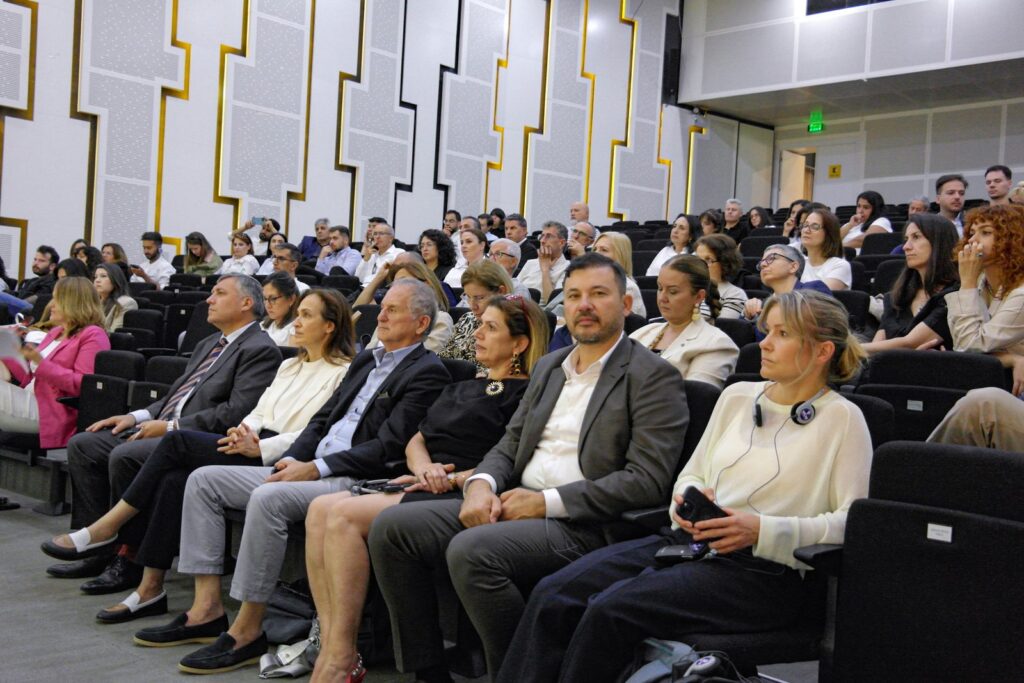
The conference day at Chamber of Architects followed hemp along its entire value chain.
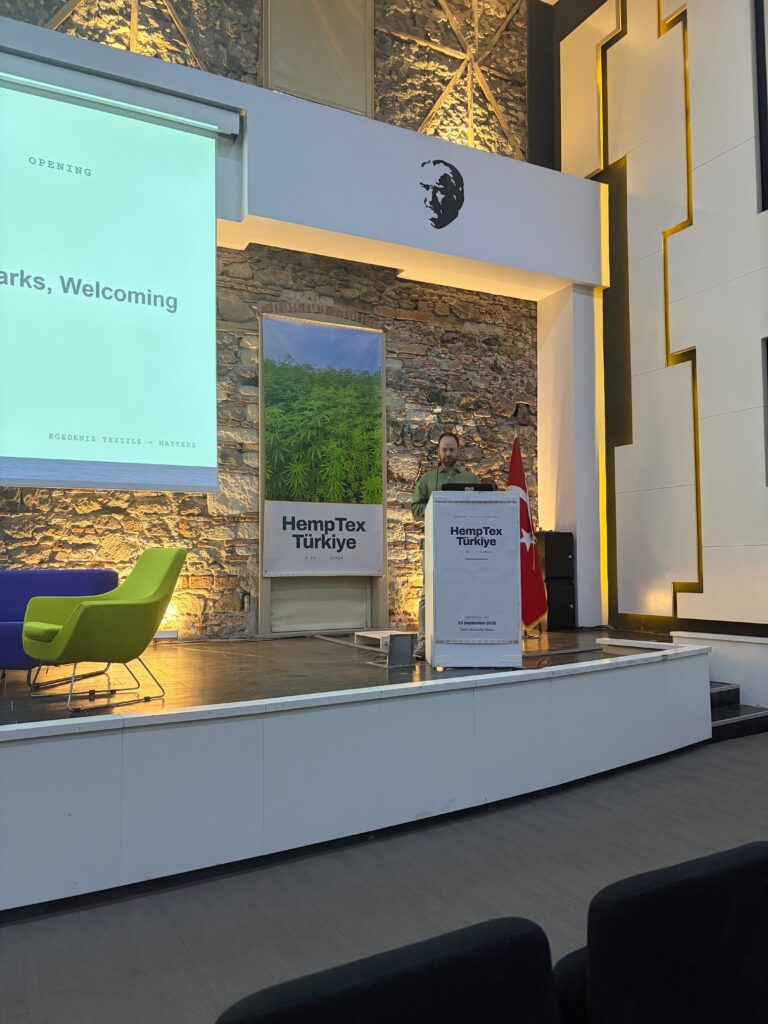
Opening
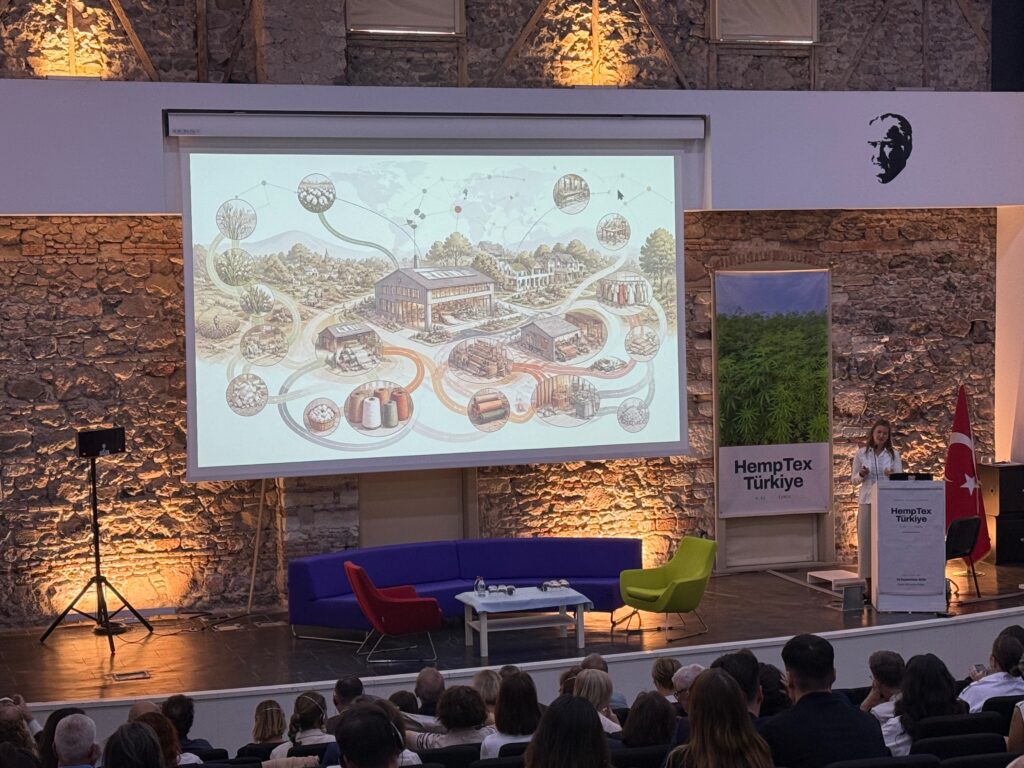
Mehmet Ünsal (Egedeniz Textile) opened the day, framing HempTex as a response to economic pressure, supply-chain disruption and new sustainability requirements — and as a first step towards a larger international event. Faruk Giray General Manager of Egedeniz Textile, told Egedeniz’s fibre journey from organic cotton to hemp. Nebahat Kılıç presented Mayteks’ research path into hemp, from yarn to knit.
International perspectives.
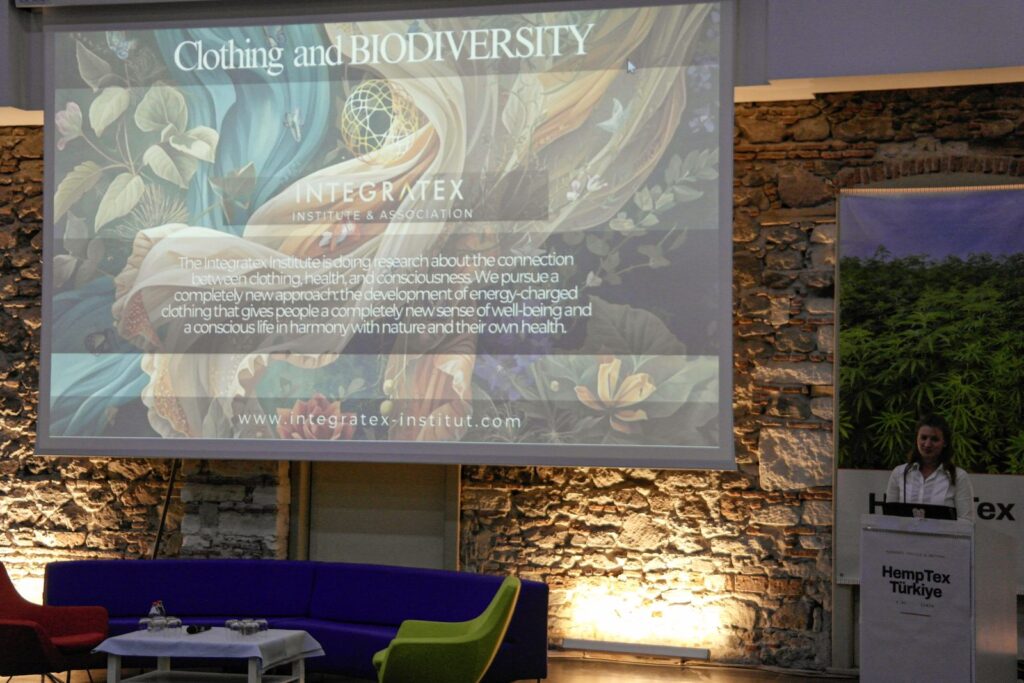
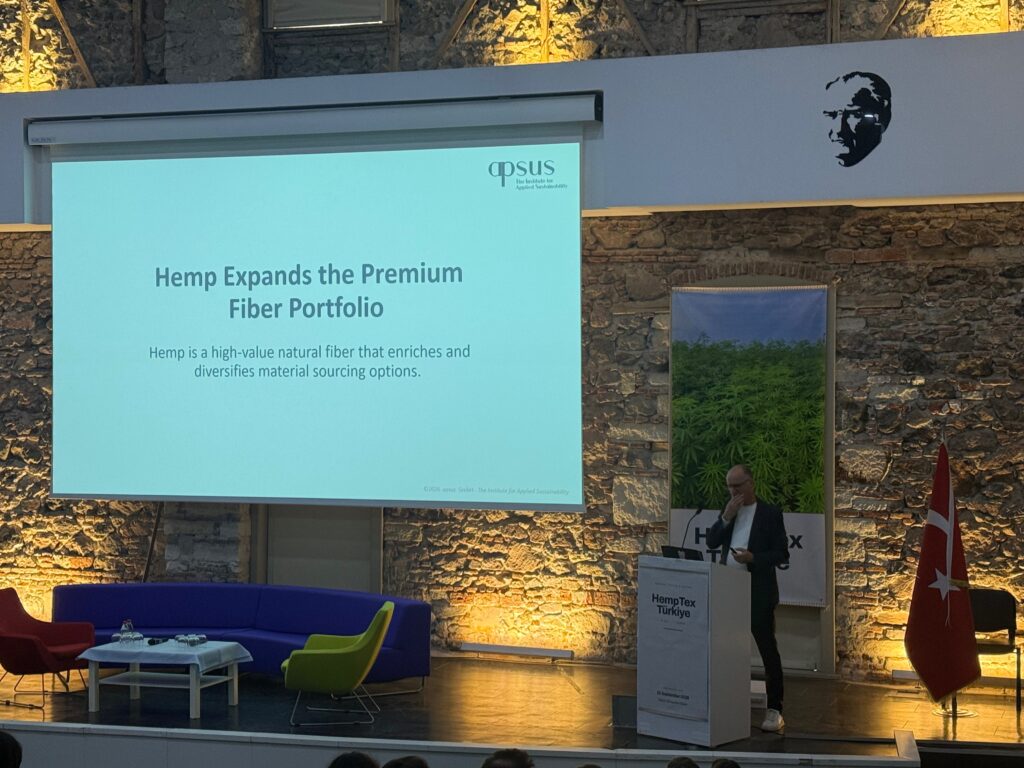
Rolf Heimann (Apsus) gave a brand’s view of the hemp market and argued that hemp will complement cotton rather than replace it. Michael Bieder (Hanfwerker Consulting) presented what is new in European hemp-fibre processing technology. Ursula Mock (Hanfliebe) described hemp as a holistic fibre — seed, stalk and textile — and made the case for decentralised, regional processing.
Growing and processing hemp in Türkiye
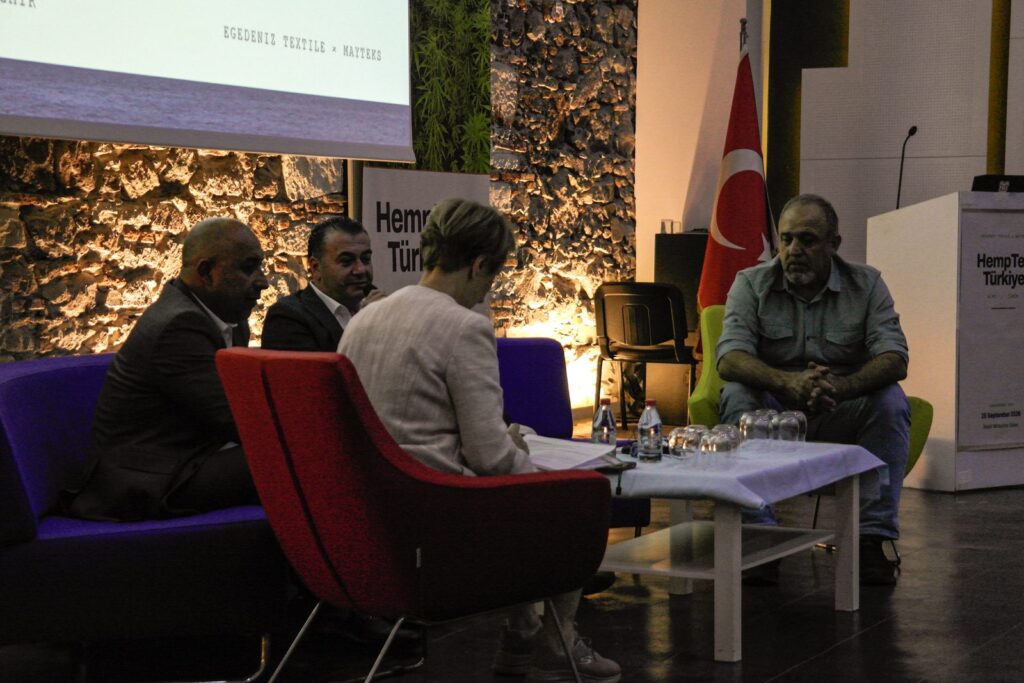
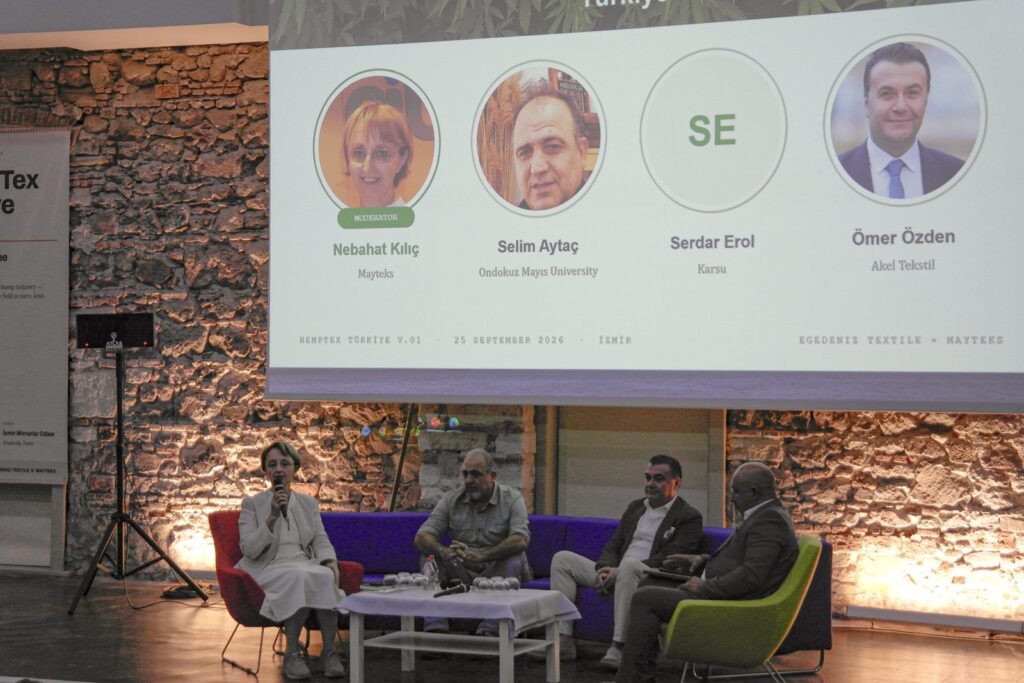
A panel moderated by Nebahat Kılıç brought together Selim Aytaç (Ondokuz Mayıs University), Serdar Erol (Karsu) and Ömer Özden (Akel Tekstil). They covered Türkiye’s production figures, the January 2026 regulation, authorised provinces and the first registered Turkish varieties, Narlı and Vezir. Ahmet Oruç (Memteks) followed with the investment case and market demand for spinning hemp blends.
Technology, Japan and investment.
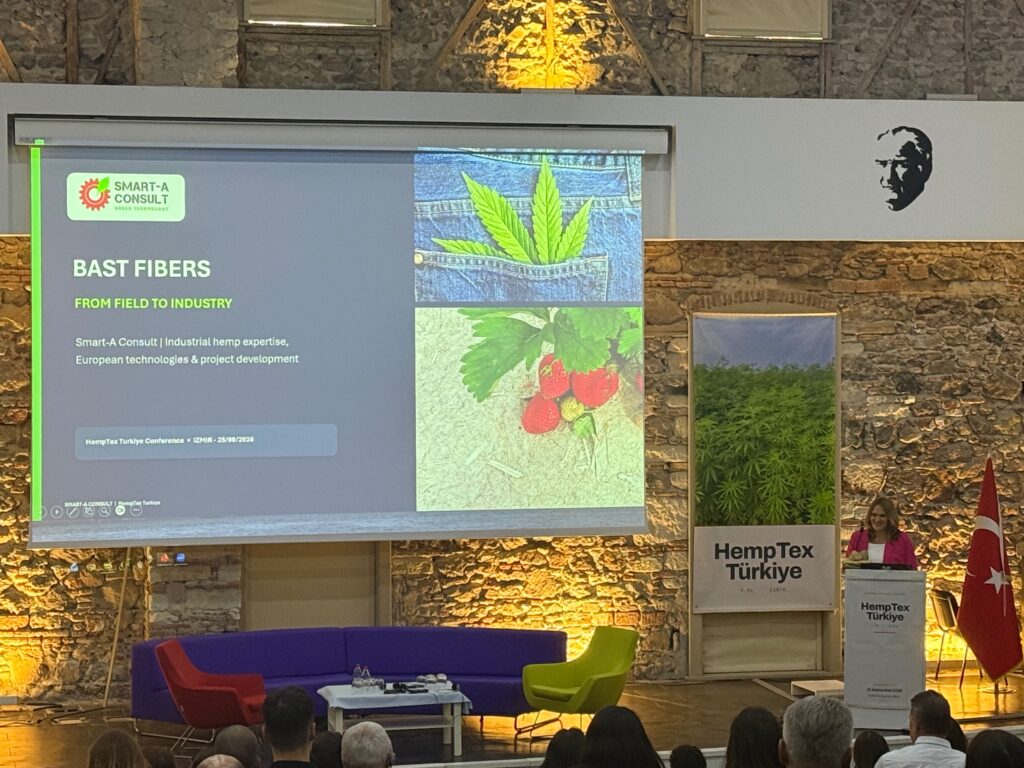
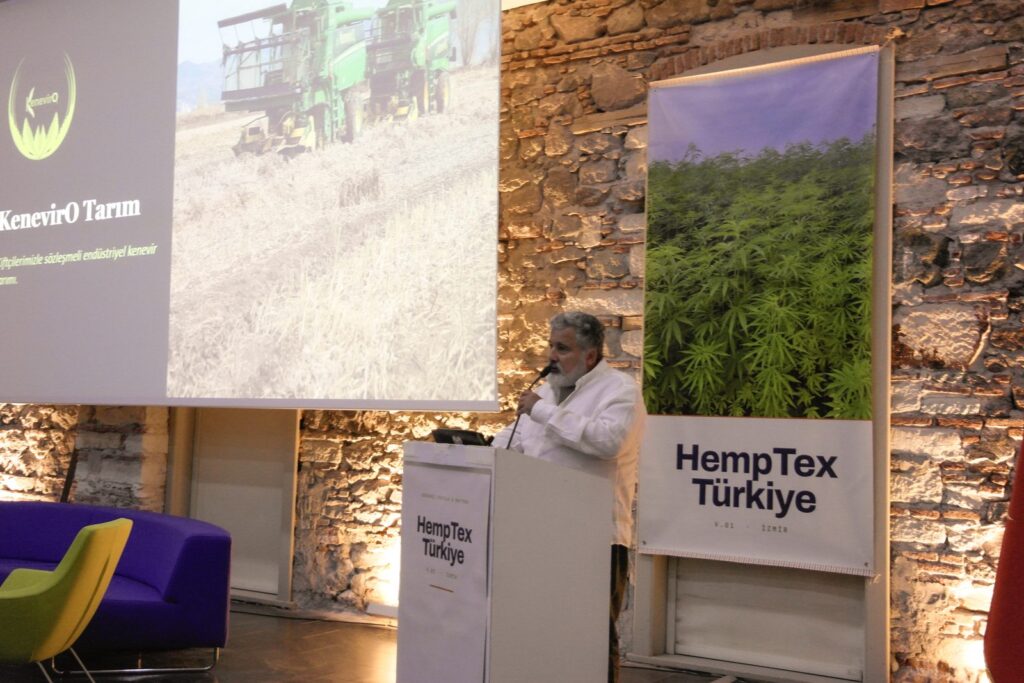
Galina Elchaninova (Smart Consult) explained bast-fibre processing from field to industry, including decortication lines and markets for both fibre and hurd. Joining online, Masaharu Takano (JIHE) mapped Japan’s hemp industry in 2026 — a small, premium, documentation-heavy market where Turkish suppliers are not yet present. Uğur Balkuv (Keneviro) presented an integrated model of contracted farming and processing in Samsun.
Market and buyers
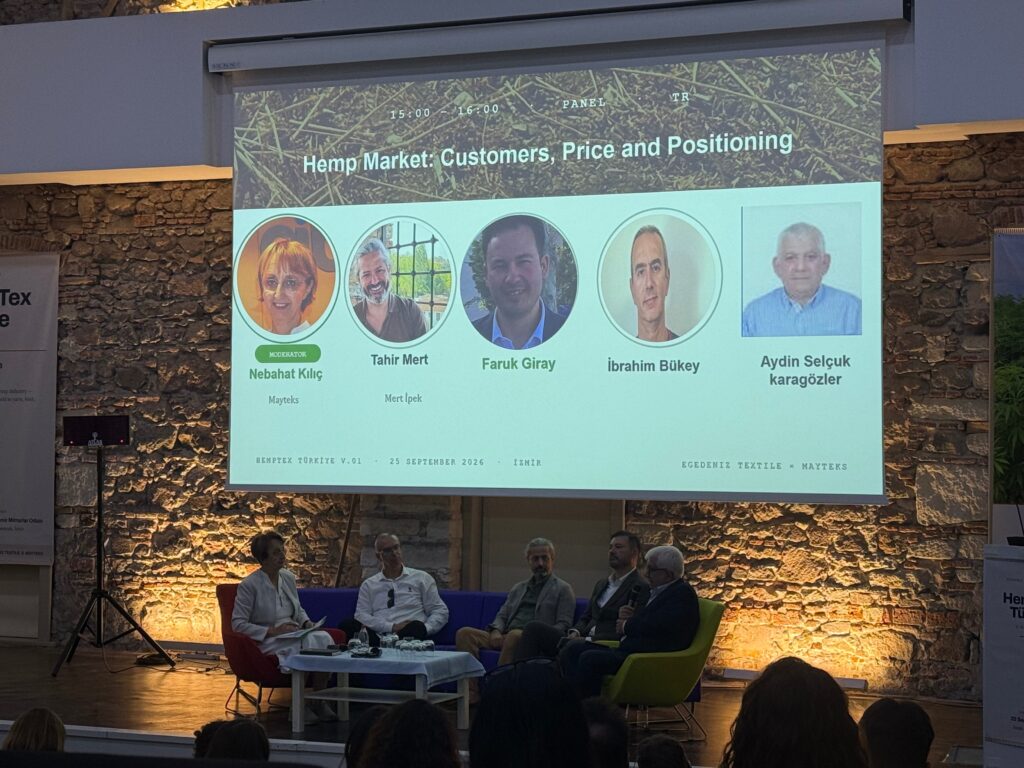
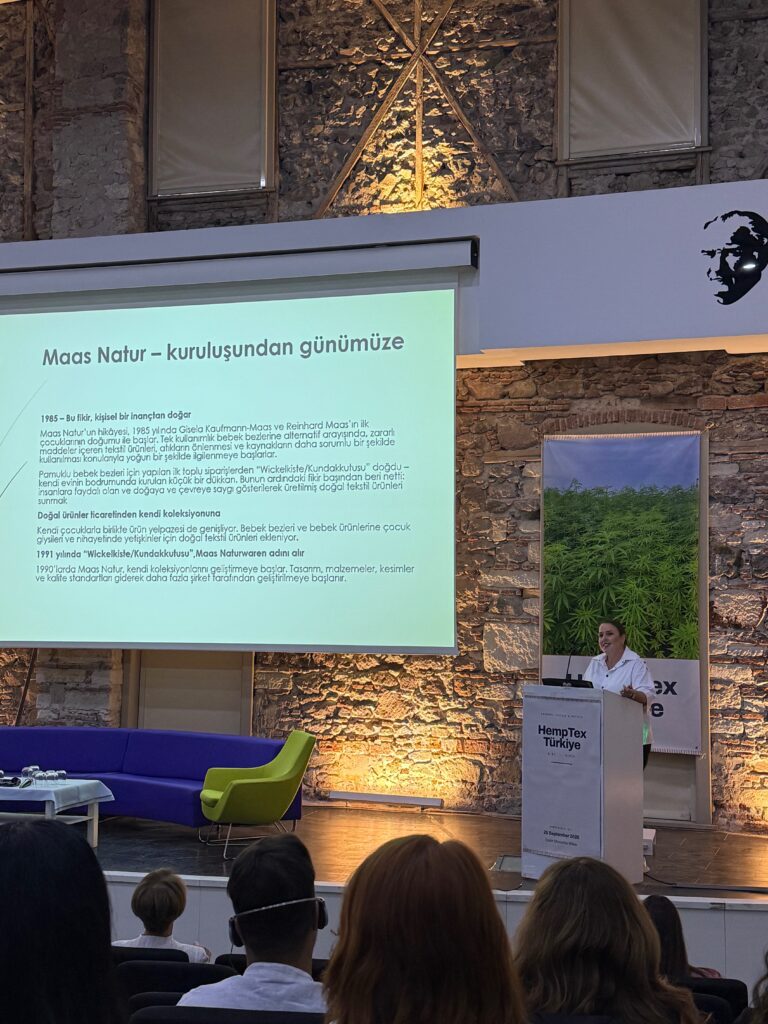
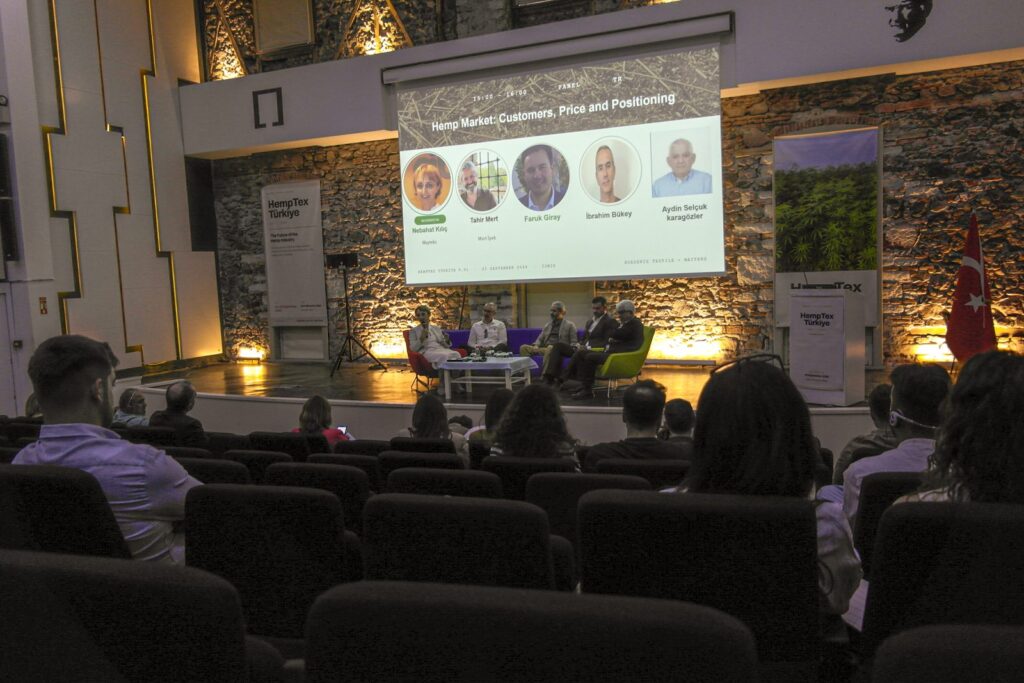
A second panel moderated by Nebahat Kılıç discussed customers, price and positioning with Faruk Giray (Egedeniz Textile), Tahir Mert (Mert İpek), Ergin Turanlı and İbrahim Bükey. Füsun Örgen (Maas) then delivered the clearest buyer message of the day: comfort, quality, design and price must work first — only then does the sustainability story add value.
Certification
The closing panel, moderated by Uygun Aksoy, looked at regulation, gaps and global standards with Selin Islakça (Control Union), Güzin Foglino (ICEA) and Ali Ertuğrul (USB) — from the Responsible Hemp Standard, GOTS, OCS and ROC to the upcoming EU Digital Product Passport.
What we took away
- Türkiye has the ingredients: suitable regions, registered local varieties, early processing capacity, a mature textile industry and proximity to Europe.
- Hemp complements cotton. Its strongest uses are blends, premium products, workwear, interiors and technical applications.
- Blends are the practical way in. Around 15–25% hemp uses existing cotton infrastructure while keeping hand feel and price under control.
- The product has to sell itself. Softness, fit, design, consistent supply and a fair price come before the fibre story.
- Traceability and evidence matter. Lot-level records from field to bale to yarn, and verified data behind every environmental claim, will decide who can sell to European and Japanese buyers.
The challenge is no longer proving that hemp can be grown or processed in Türkiye. It is proving that Türkiye can deliver the same quality every season, turn it into products people want, and back every claim with evidence.
Thank you
Our sincere thanks to every speaker, moderator and panellist for sharing their knowledge so openly, and to everyone who travelled to İzmir to join us. Special thanks to Burcu Filebelli and Powerseed for opening their hemp field to our guests, and to our co-organiser Mayteks for building this first edition with us.
HempTex Turkey V.01 was a first step in answering the growing demand for hemp and showing what Türkiye can offer, from the field and the fibre to the finished fabric. We look forward to growing this platform in the years ahead and bringing together more of the partners who are shaping Türkiye’s hemp industry.